Looking for a Wedding Event Venue? Here Is What to Check Before Booking

Planning a wedding in India is one of the most joyful, emotionally charged, and logistically demanding undertakings a family can manage. The average Indian wedding involves 47 or more vendors, three to six functions, and 300 to 500 guests — orchestrated across multiple days of rituals, performances, and celebrations where every detail carries meaning and every decision carries consequence. At the centre of every one of those decisions sits the most important one of all: choosing the right wedding event venue.
Get the venue right and everything else becomes easier. The catering, the décor, the accommodation, the guest experience, the photography, the flow of each function — all of it builds on the foundation the venue provides. Get the venue wrong and no amount of planning, budget, or talent from other vendors can fully compensate. A beautiful venue that cannot accommodate your guest count, a stunning property without in-house catering flexibility, a romantic estate that leaves guests stranded because accommodation is 45 minutes away — these are the decisions families regret most deeply and cannot reverse.
India has emerged as the world’s second-largest wedding market, with destination weddings representing the fastest-growing segment of an already booming industry. Luxury venues at premium destinations — forest estates, vineyard properties, heritage palace hotels, beach resort takeovers — book 12 to 18 months in advance during peak season. Starting your venue search early, evaluating methodically, and asking the right questions before you commit your deposit is not just good advice. It is the difference between the wedding your family dreamed of and a succession of compromises that diminish the celebration progressively as planning progresses.
This complete guide walks couples and families through every dimension of wedding venue selection — the 12 categories of questions to ask before booking, the red flags to identify before committing, the differences between venue types, what small weddings need versus large celebrations, the role of the hotel venue model in 2026 Indian weddings, and why Hotel Irada — a 66-acre working winery estate near Pune, recognized by Condé Nast, Michelin, and Travel + Leisure as one of India’s finest properties — represents what a perfect wedding function venue looks like in practice.
Why Venue Selection Is the Most Consequential Wedding Decision You Will Make
Before examining what to check, understanding why venue selection carries disproportionate weight in the overall wedding planning process provides the context that makes every subsequent question more meaningful.
The Venue Shapes Every Other Decision
Your wedding venue is not one decision among many equal decisions. It is the foundational choice that determines the scale of your guest list, the style of your décor, the flexibility of your catering, the logistics of your guest accommodation, the timeline of each function, the photography aesthetic, and the overall character of the celebration. Every other vendor you engage makes their recommendations and adjustments based on the venue you have already chosen.
A venue with a forest backdrop and vineyard sprawl calls for décor that works with natural abundance rather than against it. A venue with in-house catering and an executive chef shapes your menu planning in one direction. A venue where guests can stay on-site rather than traveling back to a distant hotel shapes the entire evening’s energy — guests relax differently when they know their room is a five-minute walk away rather than a 40-minute drive.
Peak Season Reality — The Venues You Want Are Already Being Booked
For weddings during India’s peak season — November through February — luxury venues at destination properties book 12 to 18 months in advance. The best photographers, the most celebrated decorators, and the most sought-after wedding planners follow the same timeline. If you are reading this guide in early 2026 and planning a late 2026 or early 2027 wedding, the venue search is not something to begin after the engagement celebration. It is the first call you make.
Properties like Hotel Irada — a Condé Nast Hot List property with 66 acres of vineyard and forest, in-house Michelin-quality dining, and the rare combination of estate scale and boutique intimacy — receive wedding venue enquiries months before the dates in question. Confirming your date, understanding availability, and beginning the direct conversation with the events team is a priority decision, not a downstream one.
The Complete Checklist — What to Check Before Booking a Wedding Event Venue
Category 1 — Capacity and Space Configuration
The first and most non-negotiable check is whether the venue can genuinely accommodate your guest count — not as a theoretical maximum but as a comfortable, safely managed, aesthetically appropriate number for the scale of celebration you are planning.
Ask the venue for its actual comfortable capacity across different configurations — seated dinner for 300 guests is a different space requirement from a cocktail reception for the same number, which is different again from a seated ceremony with an aisle and stage. Confirm the maximum capacity as certified by the venue’s event licence, not merely the number they mention during the site visit conversation.
For Indian weddings with multiple functions, check whether distinct spaces exist for each event — can the mehendi and sangeet use different venue areas simultaneously? Can the haldi be separated from the main ceremony space logistically? Is there outdoor overflow space for large families who gather in groups between functions without disrupting the ceremony flow?
At Hotel Irada, the 66-acre estate provides a genuine multi-space wedding canvas — vineyard ceremony settings, lawn spaces for haldi and mehendi rituals, pool-adjacent areas for cocktail gatherings, the Rosso restaurant for intimate family dinners, and the estate’s heritage manor architecture for photography moments that require no additional décor to be extraordinary.
Category 2 — Catering — In-House, External, and Flexibility
Food is the dimension Indian wedding guests talk about most after the celebration ends. The quality, variety, abundance, and cultural authenticity of wedding catering is not a peripheral consideration — it is central to how families experience and remember the event. Checking the venue’s catering provision thoroughly before booking prevents the most common post-wedding regrets.
Ask whether catering is in-house, external, or a combination. In-house catering from a venue with a serious culinary team — particularly a property with Michelin Guide recognition like Hotel Irada — provides quality assurance, seamless coordination, and the creative menu development that comes from a kitchen team that knows the venue’s spaces, equipment, and operational rhythms intimately.
Confirm whether outside caterers are permitted if your family has a specific regional cuisine requirement that the in-house kitchen does not specialize in. Check whether food tastings are available before confirming menus. Understand how the venue handles dietary requirements — vegetarian, Jain, vegan, gluten-free — across multi-day events with different guest configurations. And ask about live counter options, the bar programme, and the kitchen team’s familiarity with the specific cuisine styles your wedding menu requires.
At Hotel Irada, the estate’s dining philosophy — reflected across Rosso, the Irada Pool Club, and private dining experiences ranging from forest picnics to vineyard lunches — brings serious culinary ambition to every meal. Michelin Guide recognition is not an academic achievement. It is a kitchen team and food philosophy that shows directly in the quality of every plate served at wedding events.
Category 3 — Accommodation — Rooms, Block Rates, and Guest Logistics
For destination wedding venues and multi-day celebrations where guests travel from across India, accommodation logistics are among the most practically consequential considerations in venue selection. A venue that hosts a beautiful wedding but cannot accommodate the wedding party and key guests on-site creates logistical friction that fragments the celebration and dilutes the experience.
Check the total room count available for exclusive booking versus shared availability with other guests. For smaller weddings and intimate estate celebrations, full property buyout — where the entire venue is reserved for the wedding party — creates the private, immersive atmosphere that makes a wedding feel genuinely exclusive rather than a function in a shared facility. Hotel Irada’s estate lends itself naturally to this model, with Reserve Rooms, Gallery Rooms, Vineyard Suites, and The Collector’s Suite providing accommodation across categories that suit different family members.
Confirm room block rates for outstation guests who need accommodation adjacent to the ceremony venue. Check whether a room block can be held for a defined period while guest RSVPs are confirmed, and what the release policy is for unbooked rooms in the block. For guests who cannot be accommodated on-site, ask the venue about partner properties or recommended nearby options across different price points — from luxury suites for immediate family to comfortable mid-range rooms for extended guests.
Category 4 — Venue Exclusivity — Shared or Private
This question matters more than most couples realize until they experience its implications. A wedding function venue that also hosts other events — conferences, other weddings, public dining — on the same days as your celebration creates an energy dilution that no amount of décor or planning fully compensates for.
Ask explicitly whether your wedding would be the only event on the property during your booking period. If the venue books multiple events simultaneously, understand how event spaces are separated, how staff attention is divided, and how noise from a concurrent event might affect your ceremony, dinner, or sangeet.
For the most meaningful celebrations, full venue exclusivity — the property is yours, the staff are entirely focused on your family, and no other event competes for space, attention, or energy — is the gold standard. Properties that offer estate buyout options for weddings provide this exclusivity at the premium that the experience genuinely justifies.
Category 5 — Vendor Policies — External Partners and Restrictions
Most couples arrive at a wedding event venue with strong preferences about specific photographers, decorators, DJs, or entertainment acts they want for their celebration. Understanding the venue’s policy on external vendors before booking prevents the discovery — after the deposit is paid — that your preferred photographer is not on the approved list or that your family’s trusted decorator cannot bring their own equipment.
Ask for the full list of approved or preferred vendors across all categories — photography and videography, décor and floral, music and entertainment, wedding cake and sweet stations, transportation, and any other vendor category relevant to your wedding. Understand whether vendors not on the approved list can be added through an application process, and what costs or conditions that process involves.
Some venues operate open vendor policies — any professional vendor of the couple’s choice is welcome. Others maintain curated preferred vendor lists that ensure coordination quality and in-house alignment. Both models have merits. The critical point is knowing which model the venue operates before booking, not discovering it afterward.
Category 6 — Timeline and Function Scheduling
Indian weddings typically span three to five days of functions — from the mehendi and haldi through the sangeet, the wedding ceremony itself, and the reception. Each function has different timing requirements, different space configurations, different lighting and sound needs, and different guest configurations.
Check whether the venue can support multi-day function scheduling without requiring you to re-set and re-configure spaces between events from scratch each time. Understand the latest time functions can continue — noise ordinances across many Indian cities require music to stop by 10 PM, and a venue that does not proactively disclose this creates conflict when the sangeet is in full swing at 9:45 PM. Ask about generator and power backup provisions for outdoor events where municipal power cuts could affect lighting, sound, and kitchen operations.
For each function, understand the specific venue space being used, the setup and breakdown time required before and after, and whether your family can access the venue for décor installation the day before each function.
Category 7 — The Setting and Natural Environment
The physical setting of the venue — its landscape, natural surrounds, architecture, and visual character — determines the aesthetic foundation of your entire wedding. Every photograph taken at your celebration will reflect this setting. Every memory your guests carry home will be shaped by the environment in which the celebration occurred.
For couples who want their wedding to feel genuinely cinematic — an event that looks and feels unlike any standard hotel banquet hall — the setting is often the deciding factor above all others. A vineyard estate surrounded by forest, a heritage manor with centuries of architecture, a beachside property where the Arabian Sea provides the ceremony backdrop — these settings are irreplaceable. No floral arrangement, no lighting design, and no décor package can create from scratch what a genuinely extraordinary natural and architectural setting provides as its baseline.
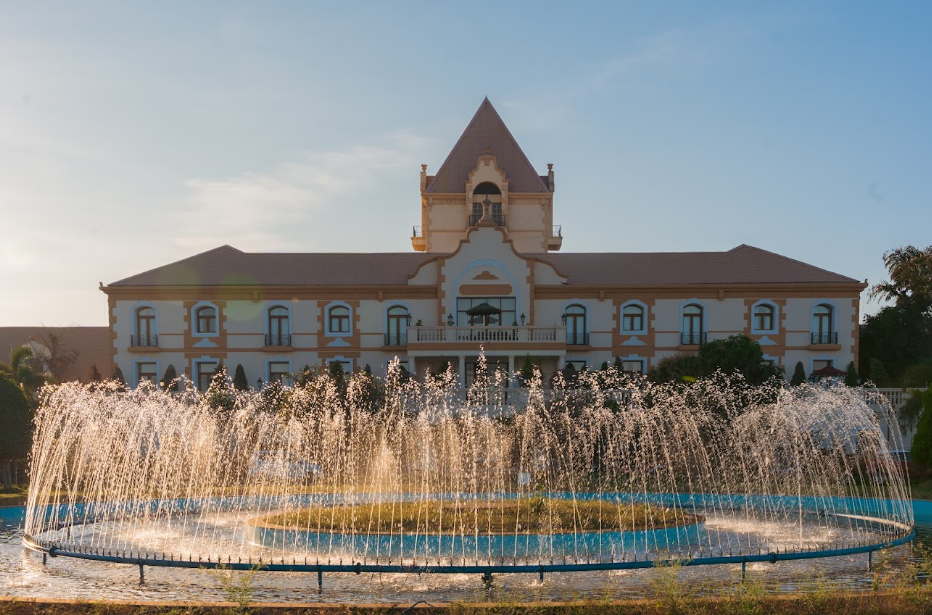
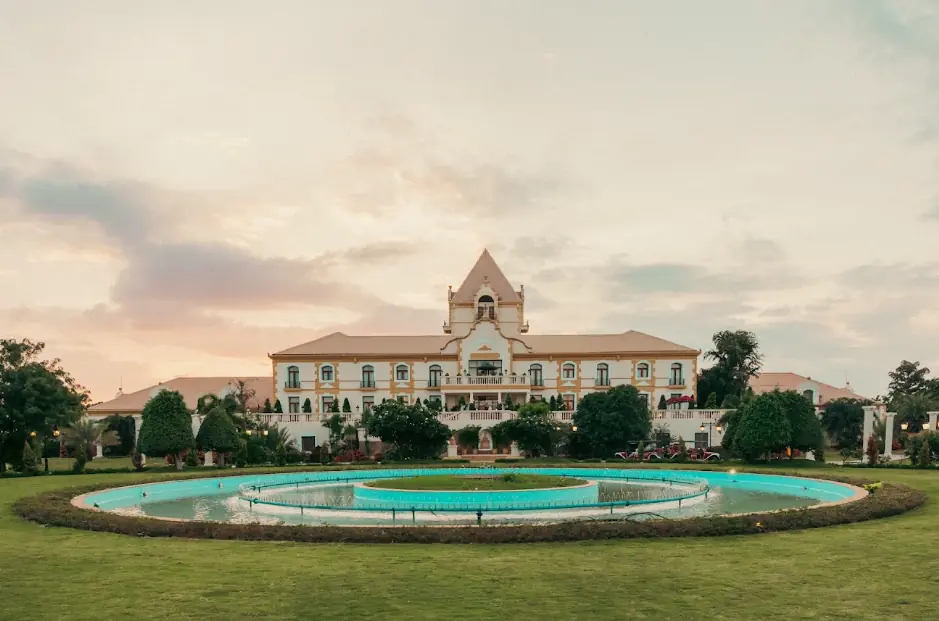
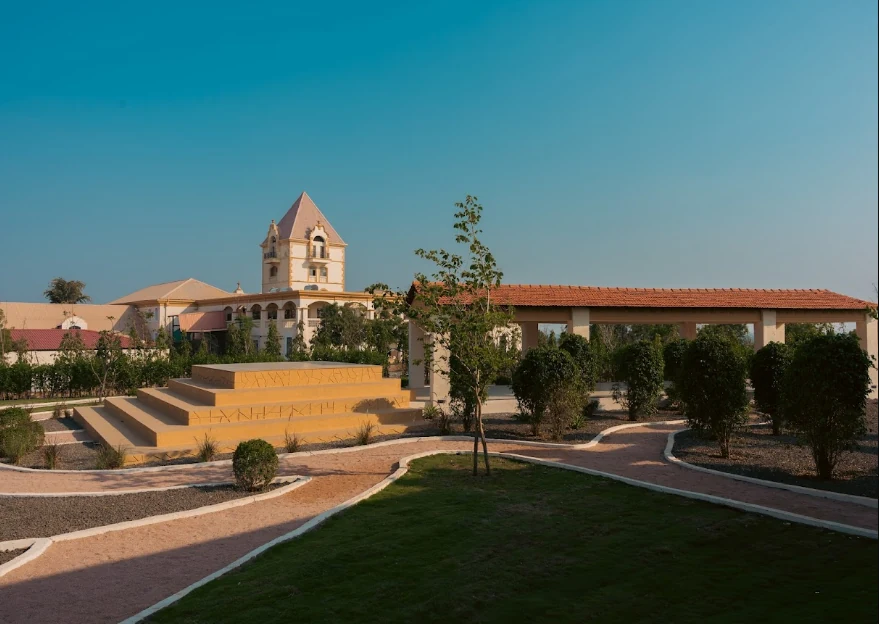
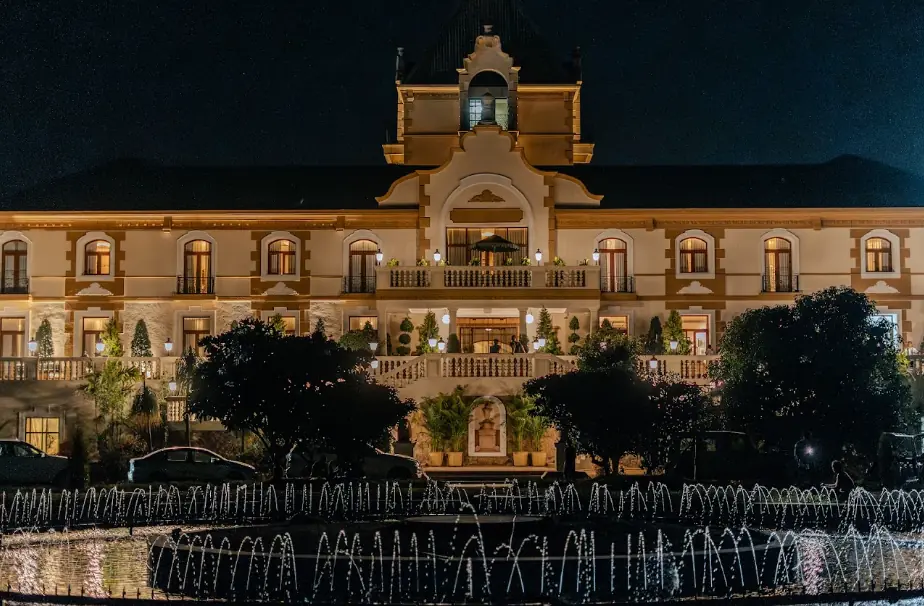
Hotel Irada’s 66-acre estate — a working winery surrounded by 4,000 acres of reserve forest, built on Vijay Mallya’s storied 2000s property and reborn with the design sensibility that earned Condé Nast recognition — is precisely this kind of setting. Walk down an aisle between grapevines. Host sundowners on the helipad with sweeping valley views. Plan a haldi by the checkered pool framed by wild roses and tangled ivy. Every function at Hotel Irada unfolds against a backdrop that no banquet hall photograph can approach.
Category 8 — Budget Transparency and What Is Actually Included
One of the most common sources of wedding planning stress is the gap between a venue’s headline quote and the final invoice. Understanding exactly what is and is not included in the venue fee before committing your deposit prevents the accumulation of add-on costs that can inflate a wedding budget by 20-40% above initial expectations.
Ask for a complete itemized breakdown of what the venue quote includes — space rental, staffing, catering, bar, décor basics (linens, chairs, tables, lighting), equipment (microphone and sound systems, generator backup), service charges, GST, and any mandatory package inclusions. Confirm what is charged separately — external vendor access fees, parking management, accommodation room blocks, specific experience elements, and any customization of the venue’s standard setup.
Ask directly whether the quoted rate is a fixed price or an estimate. For catering, understand whether pricing is per-plate, per-event, or package-based, and what the adjustment process is if guest headcount changes between initial booking and the final confirmation. Price transparency is not a negotiating tactic — it is the foundation of a functional planning relationship with the venue.
Category 9 — Weather Contingency and Backup Plans
India’s wedding season spans months when weather can be genuinely unpredictable. Outdoor ceremonies, garden receptions, and vineyard dinners create the most beautiful wedding photographs and the most memorable guest experiences — but they require clear, thoughtful weather contingency planning from any professional venue.
Ask what the venue’s weather backup plan is for each proposed outdoor function. Is there a fully operational indoor alternative that can accommodate the same guest count without significant compromises in ambiance? Can the transition from outdoor to indoor happen without notice if weather changes rapidly? What costs are associated with using the backup plan if weather forces the change?
For venues with genuine indoor-outdoor integration — where covered pavilions, heritage interiors, and outdoor lawns complement each other naturally — weather contingency is less disruptive because the indoor alternative genuinely competes in aesthetic quality with the outdoor plan rather than substituting a plain ballroom for a garden ceremony.
Category 10 — Accessibility and Guest Logistics
Your venue is only as functional as it is accessible — for your oldest guests, your youngest guests, guests arriving from different parts of India, and families managing luggage, gifts, and children across multi-day celebrations.
Check the distance from the nearest airport, railway station, and major highways. For destination wedding venues, this distance significantly affects guest arrival logistics and the feasibility of guests attending specific functions if they cannot all stay on-site. Ask whether the venue has or can coordinate transportation — buses, shuttles, and cars for guests across venues and airports.
Confirm accessibility for guests with mobility challenges — wheelchair access to ceremony spaces, accessible bathrooms at each function location, and ground-floor accommodation options for elderly family members who cannot manage stairs. Check parking capacity against your expected guest count, particularly for weddings in or near major cities where parking is consistently the most underestimated logistical problem.
Category 11 — The Events Team and Planning Support
A world-class venue with an inexperienced events team is a frustrating planning experience. A beautiful setting managed by a hospitality team that has coordinated dozens of weddings, understands the specific flow of Indian wedding functions, and proactively manages the hundred small details that couples and families cannot monitor simultaneously is a transformational advantage.
Ask specifically about the events team — how many weddings have they coordinated at this property, what their planning process involves, whether a dedicated wedding coordinator will manage your event from booking through completion, and what post-booking planning support looks like. Request to speak with couples who have hosted weddings at the venue recently and ask them candidly about the planning relationship and execution quality.
The best hotel venue operations provide an events team that genuinely partners with the couple and family rather than simply executing a checklist — anticipating needs, managing vendor coordination proactively, and absorbing logistical friction so the family can be fully present for the celebration itself.
Category 12 — Sustainability, Permissions, and Legal Compliance
An increasingly important dimension of venue selection — particularly for outdoor and destination venues — is environmental and regulatory compliance. Ask whether the venue holds all necessary event permits and licences for the scale of celebration you are planning, including music and entertainment licences, food service licences, and any environmental clearances required for outdoor events near protected forest areas.
For weddings at vineyard estates, heritage properties, and forest-adjacent venues, understanding the noise and lighting regulations that apply — and how the venue has managed these in previous weddings — prevents the scenario where a beautiful outdoor reception is curtailed by regulatory constraints that the venue failed to disclose.
Small Wedding Venue vs Large Estate — What Different Scale Weddings Need
Not every family is planning a 500-guest celebration across five days. The fastest-growing segment in Indian weddings in 2026 is intimate celebrations — small wedding venue events for 50 to 150 guests that prioritize depth of experience over breadth of attendance.
What Small Weddings Actually Need From a Venue
A small wedding venue checklist differs from a large event checklist in important ways. Intimate celebrations need venues that feel genuinely suited to their scale rather than overwhelmingly large halls made to feel smaller with strategic furniture placement. The warmth of an intimate gathering disappears in a banquet hall built for 800 guests. A well-chosen small wedding venue makes 80 guests feel like exactly the right number — the space, the service, and the setting all calibrated to the celebration’s actual dimensions.
Small weddings benefit enormously from venue settings where the natural character does the work that large-scale décor does for bigger events — a vineyard table for 60 guests under estate lights, a forest clearing ceremony for 40 family members, a private dining experience in a heritage manor for an intimate reception of 30. These moments cannot be created in generic banquet spaces regardless of décor budget.
Hotel Irada’s estate structure — with distinct spaces of different scales across the 66 acres — makes it naturally suited to both intimate celebrations and larger estate-wide events. A couple wanting a 75-guest vineyard wedding finds the intimate scale entirely at home. A family planning a 300-guest multi-function celebration finds the estate’s breadth and operational capability equally accommodating.
What Large Wedding Celebrations Require
Large wedding function venue events — 300 guests and above across multiple functions — require operational capabilities that smaller venues simply cannot provide. Sufficient catering infrastructure for multiple simultaneous food service points. Sound and lighting equipment capable of covering large outdoor spaces without acoustic compromise. Parking and transportation logistics for hundreds of arriving and departing guests. Multi-function scheduling that allows different event spaces to be prepared and reset across the same day or consecutive days without operational chaos.
The most important quality a large wedding venue must demonstrate is that it has genuinely done this before at scale — that its kitchen, its events team, its vendor coordination, and its logistical management have been tested at 300+ guest events and performed to the standard the occasion requires.
Hotel Venue vs Standalone Wedding Venue — Understanding the Trade-offs
The choice between a dedicated hotel venue and a standalone wedding venue is one of the most important structural decisions in wedding planning. Both models have genuine advantages — and understanding each clearly helps couples choose the right model for their specific needs.
Why Hotel Venues Work Better for Most Indian Weddings
Hotel venues offer logistical convenience that standalone venues genuinely cannot match. In-house catering from a professional kitchen team eliminates the most operationally complex external vendor coordination. On-site accommodation means the wedding party, immediate family, and outstation guests stay where the celebration happens — no coordination between ceremony venue and accommodation hotel. Dedicated event coordinators who understand the property intimately manage vendor access, space setup, and day-of execution from a position of deep familiarity with every operational detail.
For multi-day Indian weddings where different functions have different requirements, the integrated hotel venue model — a single property managing accommodation, catering, event spaces, and guest services under one operational roof — dramatically reduces the planning complexity that coordinating multiple venues and vendors across multiple days creates.
The Standalone Venue Trade-offs
Standalone wedding venues — farmhouses, banquet halls, independent event properties — can offer competitive pricing and vendor flexibility that hotel venues may not match. However, the absence of in-house accommodation means every outstation guest needs a separate accommodation booking. The absence of in-house catering means a separate caterer engagement with its own coordination complexity. And the absence of an integrated hospitality team means the couple and family absorb vendor coordination responsibilities that a hotel events team would otherwise manage.
For families who have a specific cultural caterer whose cuisine is central to the celebration’s authenticity, or who want complete décor freedom without a hotel’s aesthetic guidelines, standalone venues can be the right choice. For families who want the most professionally managed, logistically seamless celebration — particularly across multiple days — the hotel venue model consistently delivers.
Why Hotel Irada Is India’s Most Compelling Wedding Event Venue in 2026
Hotel Irada passes every category of the checklist above — and then adds dimensions that most wedding venues, regardless of their price point, simply cannot provide.
A Setting That Makes Every Function Extraordinary
The 66-acre estate — a working winery within 4,000 acres of reserve forest, built on Vijay Mallya’s legendary 2000s property and reimagined with the design sensibility that earned Condé Nast’s Best New Hotels in India: 2026 Hot List — provides a wedding backdrop that no constructed set, regardless of décor budget, can equal.
Haldis under wild roses. Sangeets lit by the valley moon. Vows exchanged where grapevines meet the horizon. Forest picnic mehndi ceremonies under a canopy of rustling leaves. Cocktail receptions on the helipad with sweeping vineyard views. Private dinners in the estate’s heritage manor with Michelin-quality food from Hotel Irada’s kitchen. Every function at Hotel Irada unfolds in a setting that was created for exactly this — celebrations that feel cinematic, deeply personal, and entirely unrepeatable.
Multi-Function Capability Across the Full Indian Wedding Calendar
Hotel Irada’s event and venue offering covers every function in the Indian wedding calendar — from intimate pre-wedding rituals to grand reception celebrations. The estate’s distinct spaces allow multiple functions to be staged across the property simultaneously or sequentially, with each space contributing its own character to a multi-day celebration that feels varied, layered, and experientially rich rather than repetitively set in the same room with different lighting.
The dedicated Wedding Celebrations page outlines the full scope of what the estate accommodates — from intimate family weddings that feel like private estate takeovers to large celebrations that leverage the estate’s full operational capacity.
Michelin-Quality Catering That Becomes Part of the Wedding Story
Hotel Irada’s Michelin Guide 2026 recognition is not merely a prestige credential. It reflects a kitchen team, a culinary philosophy, and a food and beverage programme that guests at Irada weddings experience directly in every meal served across every function. From the sangeet’s cocktail spread to the reception’s formal dinner to the morning-after brunch for the wedding party — the food at an Irada wedding is consistently one of the most commented-upon elements of every celebration hosted here.
The estate’s dining venues — Rosso for elevated Italian dining, the Irada Pool Club for relaxed all-day grazing, and an extensive private dining programme spanning forest picnics to vineyard table settings — give wedding planners and families genuine menu variety across multiple functions without compromising on quality at any point.
Complete Accommodation for Wedding Parties
Hotel Irada’s room portfolio — Reserve Rooms, Gallery Rooms, Vineyard Suites, and The Collector’s Suite — provides accommodation for the wedding party, immediate family, and VIP guests directly on the estate. For estate buyout weddings where the entire property is reserved for the celebration, guests experience total immersion in the venue’s character from their first moment of arrival through their last morning checkout.
The Collector’s Suite, in particular, is the wedding suite that Irada was designed around — an extraordinary accommodation centrepiece for the couple that sets the standard for every room across the estate. Explore all accommodation options here.
The Nyāsa Wellness Dimension — Pre-Wedding Rejuvenation
For wedding parties and families who want to integrate wellness into their pre-wedding stay at the estate, Nyāsa Wellbeing provides yoga sessions, spa therapies blending Ayurvedic wisdom with forest serenity, sauna, steam, hot plunge, and the Root and Rise wellbeing programme for deeper personal renewal. The morning of the wedding, the bride and groom’s families can each access Nyāsa separately — arriving at the ceremony refreshed, centred, and genuinely calm rather than exhausted by last-minute logistics.
No standalone wedding venue provides this dimension of the guest experience. It is unique to the hotel venue model at the level of quality that Hotel Irada’s Nyāsa represents.
The Winery and Estate Experiences as Wedding Entertainment
Perhaps the most distinctive dimension of a wedding at Hotel Irada is the estate experiences that extend beyond the formal functions — the winery tours where guests learn about the estate’s wine production, the wine tastings guided by the estate sommelier, the champagne sabering that transforms a wedding toast into a theatrical moment, the minigolf and racquet sports for guests who want activity between functions, and the forest trails and deer spotting that give guest groups genuinely memorable experiences between the wedding’s formal moments.
These experiences transform a Hotel Irada wedding from a ceremony-and-reception event into a multi-day estate immersion where guests are discovering, experiencing, and connecting throughout their stay — not just attending scheduled functions.
When to Begin Your Wedding Venue Search — And Why It Cannot Wait
For weddings during peak Indian wedding season — October through February — the planning timeline for luxury destination venues like Hotel Irada begins significantly earlier than most couples expect.
Most luxury wedding venues are booked 10 to 12 months in advance, particularly during wedding season. Properties with exceptional settings, genuine destination appeal, and the combination of accommodation, catering, and experiences that Hotel Irada provides are discussed and enquired about even earlier. A couple planning a December 2026 wedding who begins their venue search in June 2026 may find their preferred dates already committed.
The first action after reading this guide is to check availability at Hotel Irada for your preferred dates. The second is to reach out directly to the estate’s events team to begin the conversation that will determine whether this extraordinary property can be the setting for your celebration.
How to Enquire About Your Wedding at Hotel Irada
Hotel Irada’s celebrations and events team handles all wedding enquiries with the same thoughtful, personal attention that the estate’s hospitality philosophy applies to every guest interaction. Reach out directly via WhatsApp at +91 7080250472, email at info@hotelirada.com, or through the events page to begin the conversation about dates, availability, and how the estate can be tailored to your specific celebration vision.
For private event enquiries where estate exclusivity, bespoke catering, and full wedding programme coordination are the priority, the private events page provides additional detail on what a fully curated Hotel Irada wedding experience involves.
Frequently Asked Questions About Choosing a Wedding Event Venue
How far in advance should I book a wedding event venue in India?
For luxury destination venues during peak season (October to February), begin your search 12 to 18 months before your wedding date. Properties like Hotel Irada with exceptional estate settings, on-site accommodation, and Michelin-quality catering receive wedding enquiries significantly in advance of peak dates. Checking availability and securing your date with a deposit should be your first confirmed action after the engagement.
What is the most important thing to check at a wedding venue before booking?
Capacity at comfortable scale — not theoretical maximum — is the most critical first check. Beyond that, understanding exactly what is included in the venue fee, whether catering is in-house or external, what accommodation provision exists for outstation guests, and whether the venue can be exclusively yours during your booking period are the checks that most commonly make the difference between a smooth planning experience and a stressful one.
Is a hotel venue better than a standalone wedding venue for Indian weddings?
For most Indian weddings — particularly multi-day celebrations with outstation guests — hotel venues offer significant operational advantages through integrated catering, on-site accommodation, professional events teams, and coordinated vendor management. Standalone venues offer greater flexibility for outside vendors and catering. The right choice depends on the couple’s priorities, but the logistical simplicity of the integrated hotel venue model consistently reduces planning complexity for multi-day Indian celebrations.
What makes Hotel Irada special as a wedding venue near Pune?
Hotel Irada offers what no comparable wedding venue near Pune provides — a 66-acre working winery within 4,000 acres of reserve forest, Michelin Guide 2026 culinary excellence, on-site boutique accommodation, Nyāsa wellbeing facilities, estate-wide experiences from winery tours to deer spotting, and the design character recognized by Condé Nast, T&L Asia, and AD Middle East as one of India’s finest properties. For couples who want their wedding to feel genuinely cinematic and entirely personal, Hotel Irada’s estate is the setting that makes it possible.
Can Hotel Irada accommodate small intimate weddings as well as larger celebrations?
Yes. Hotel Irada’s estate structure — with distinct spaces of different scales across 66 acres — accommodates intimate celebrations of 50 to 100 guests as naturally as it accommodates larger estate-wide events. For small weddings, the private vineyard table setting, forest ceremony options, and estate buyout model create the intimate, immersive character that defines the best small wedding venue experiences.
How do I enquire about hosting my wedding at Hotel Irada?
Reach out directly via WhatsApp at +91 7080250472, email at info@hotelirada.com, or through Hotel Irada’s celebrations and events page. The events team will respond to discuss dates, availability, and the full scope of what the estate can provide for your specific celebration vision.
Final Thoughts
Choosing the right wedding event venue is the most consequential decision in your entire wedding planning journey. It shapes everything that follows — the catering, the accommodation, the guest experience, the photography, the flow of each function, and ultimately the character of the celebration your family will remember across decades.
The checklist in this guide covers every dimension of that decision — capacity and space, catering and food, accommodation and guest logistics, exclusivity, vendor policies, timeline management, budget transparency, weather contingency, accessibility, events team quality, and legal compliance. Working through every category before committing your deposit is the discipline that separates confidently planned celebrations from regretfully improvised ones.
And when the checklist is complete — when you have asked every question and evaluated every dimension — the venue that answers every category with genuine excellence is the one worth booking.
Hotel Irada is that venue for weddings near Pune. A 66-acre working winery estate recognized by Condé Nast, Michelin, and Travel + Leisure as one of India’s finest properties. A hotel venue with Michelin-quality in-house catering, boutique estate accommodation, Nyāsa wellbeing facilities, and the kind of natural and architectural setting that transforms every function into something genuinely irreplaceable. A property designed for the celebrations that matter most — slow, soulful, and entirely your own.
Your wedding deserves a wedding function venue worthy of everything it means. Begin the conversation with Hotel Irada’s events team today — and take the first step toward a celebration your family will talk about for the rest of their lives.